

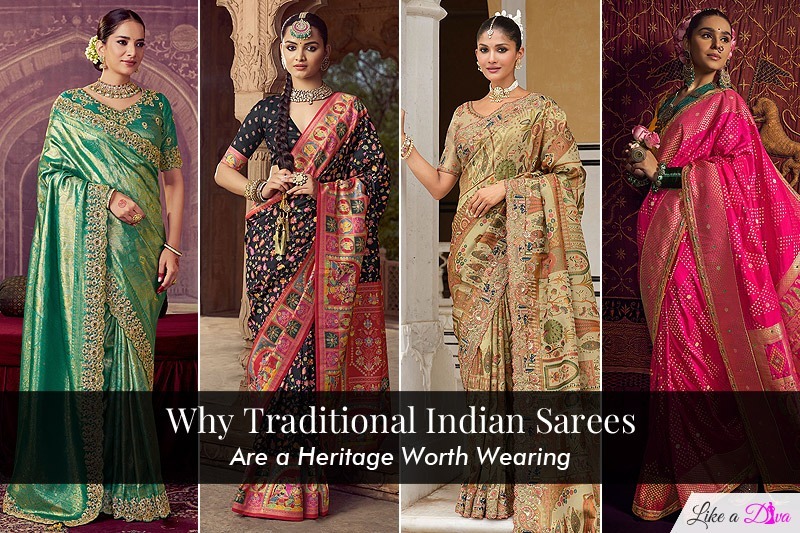
Why Traditional Indian Sarees Are a Heritage Worth Wearing
There's a particular kind of magic that happens when you unfold a beautifully printed saree inspired by India's oldest weaves. The fabric catches the light, the motifs whisper stories of the artisans who first imagined them, and suddenly, you're holding something that feels far bigger than cloth. This is India's gift to the world of fashion: nine yards of pure artistry that has dressed queens, freedom fighters, film legends, and now a new generation of women who refuse to let beauty like this slip into the past.
Walk through any global red carpet and you'll spot it. Deepika Padukone wore a custom ivory saree to Cannes that made the international press swoon. Alia Bhatt chose a heritage Banarasi for her wedding, sparking a wave of brides rethinking Western gowns. Priyanka Chopra has draped herself in Indian weaves at the Met Gala. Even Oprah Winfrey, Kim Kardashian, and Hillary Clinton have stepped out in sarees. The world has finally caught up to what Indian women have always known.
Let's look at these beautiful weaves and prints, because each one carries a story worth telling.
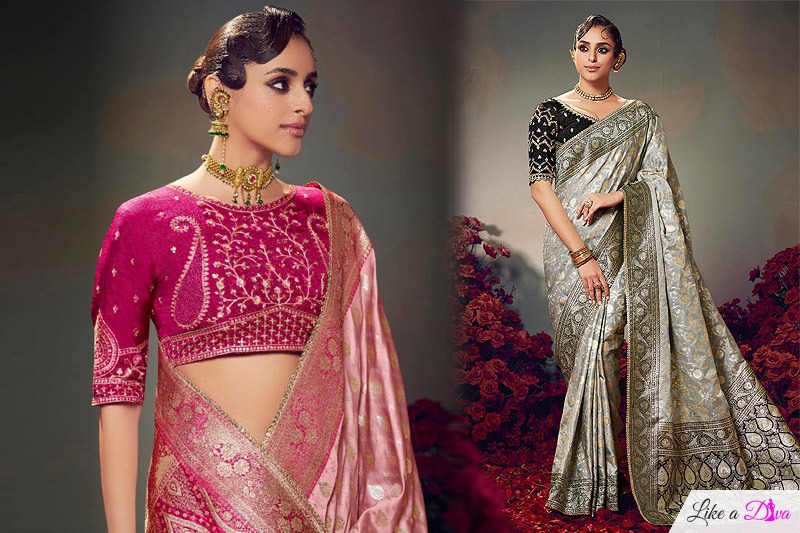
Banarasi Silk Saree: The Mughal Dream of Varanasi
The Banarasi traces its origins back nearly 2,000 years, with mentions in the Mahabharata, but it truly bloomed during the Mughal era in the 14th century, when Persian weavers settled in Varanasi and merged their motifs with Indian craft. The gold and silver zari shimmers like liquid sunlight, the floral jaal patterns climb the fabric like vines in a Mughal garden, and the pallu often features mango butis, peacocks, and tiny temple domes. Wrap yourself in a Banarasi silk saree once, and ordinary fabric never feels the same again.
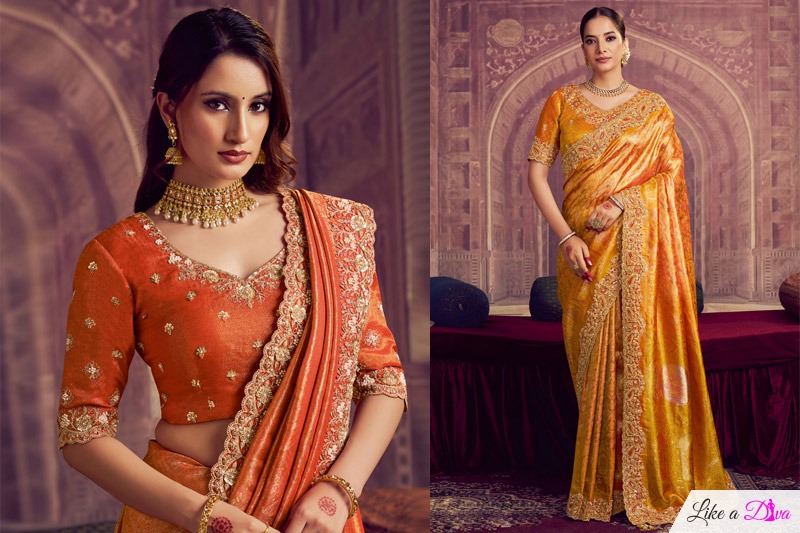
Kanjivaram Silk Saree: South India's Iconic Weave
The Kanjivaram legacy is roughly 400 years old, with weaving in Kanchipuram dating back to the Chola dynasty. The original sarees were made from pure silk and became famous for their contrasting borders and pallus, where a deep maroon body met a mustard gold border, or a parrot green pleat met a fuchsia pallu. The Kanjivaram silk saree carries this South Indian grandeur into festive wear, translating iconic motifs such as lions, suns, peacocks, and temple borders onto soft silks. The colour stories stay loyal to the originals: reds, yellows, blues, and that unmistakable zari gold running along the border. It gives you a regal South Indian mood without the weight, perfect for weddings, housewarmings, and festive lunches.
.jpg)
Patola Saree: Gujarat's Pride and Joy
The Patola legacy is over 900 years old and rooted in one of the most complex weaves in the world. The Salvi family of Patan has guarded the original double ikat craft for centuries, where every thread is tied and dyed in precise patterns before weaving begins. The result is a saree filled with geometric elephants, parrots, dancing figures, and floral grids that look almost magical on fabric. The Patola Print Saree brings this Gujarati heirloom mood to modern wardrobes, recreating the signature geometric patterns and jewel-toned palette on georgettes, silks, and crepes. Expect rich reds, mustard yellows, deep greens, and royal blues arranged in iconic diamond grids and animal motifs. It's festive, bold, and carries all the drama of a traditional Patola with a drape that feels light and wearable.
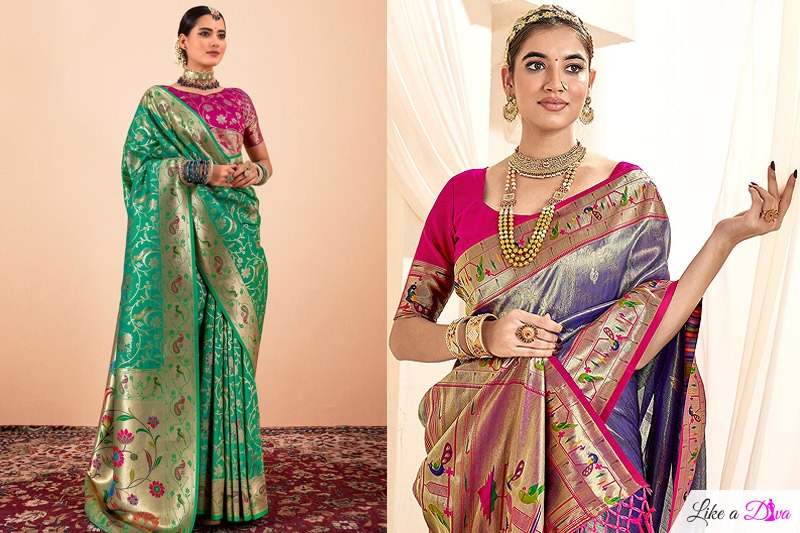
Paithani Saree: Maharashtra's Forever Favourite
The Paithani legacy is around 2,000 years old and is mentioned in Roman trade records, when the original handwoven sarees were exchanged for gold by weight. Born in the ancient town of Paithan along the Godavari River, the craft was later patronised by the Peshwa rulers and became the pride of Maharashtra. The signature kaleidoscopic pallu of the original shifts from peacock blue to emerald green depending on how the light hits the silk, with parrots, lotuses, and peacocks woven in golden zari. The Paithani Silk Saree brings this Maharashtrian beauty to a wider audience, recreating the iconic motifs and jewel-toned borders on silk. Think peacock blues, parrot greens, rani pinks, and that unmistakable golden border running along the pallu. It's the saree you reach for when you want to feel like Maharashtrian royalty.
.jpg)
Pashmina Print Saree: Kashmir’s Soft Luxury
The Pashmina print saree draws from a 3,000-year-old legacy, with pashm wool being spun in the Himalayan valleys since the 3rd century BC. The original Pashmina comes from the soft inner coat of the Changthangi goat, which lives at 14,000 feet in Ladakh, where the harsh cold produces fibre finer than human hair. The Pashmina Print Saree carries forward this heritage by recreating iconic Kashmiri motifs such as intricate paisleys, chinar leaves, almond butis, and Mughal garden florals onto flowy fabrics like silk, georgette, and modal.
Bandhani Print Saree: Gujarat's Dotted Heritage
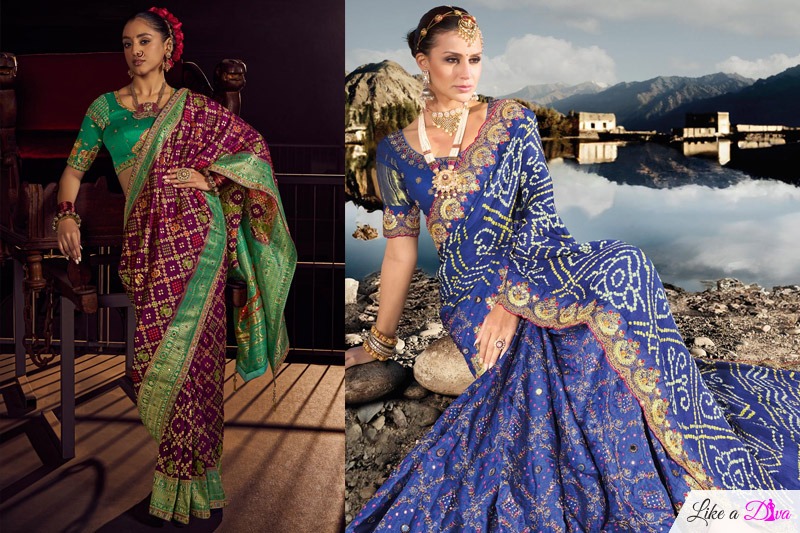
The Bandhani tradition is over 5,000 years old, with the earliest references found in Harappan dye pots and the cave paintings of Ajanta. The Khatri community of Kutch and Jamnagar has practised the original tie-and-dye craft for generations, creating tiny dotted patterns of mangoes, waves, peacocks, and the famous chandrakala star. The Bandhani print saree captures this joyful spirit and brings it to modern wardrobes through lightweight georgettes, chiffons, and crepes. The signature dots bloom across marigold yellows, deep reds, and parrot greens, making it a festive favourite that drapes easily and travels even better.
.jpg)
Pichwai Work Saree: Rajasthan's Devotional Art on Silk
Pichwai art began nearly 400 years ago in the temple town of Nathdwara, where devotees painted devotional cloths to hang behind the idol of Shrinathji, a child form of Krishna. These paintings depicted lotus ponds, dancing gopis, sacred cows, and seasonal celebrations in jewel-toned colours. The Pichwai work Saree translates these divine scenes onto silk, letting you wear a temple mural across your pallu. Every fold reveals another story of devotion, and the rich palette of mustard yellow, rani pink, and cream feels made for weddings and soirées.
Styled for Today
What makes this moment exciting is how today's women are styling these pieces in modern ways. A Banarasi paired with a belt. A Kanjivaram worn with statement jewellery and a sleek low bun for a wedding sangeet. Designers like Sabyasachi Mukherjee have built empires reviving these crafts and bringing younger buyers back to Indian textiles.
Choosing a saree rooted in Indian heritage is more than a fashion decision. It helps keep ancient art forms alive. If you're ready to find your own, the Like a Diva collection has a beautiful edit of heritage-inspired sarees waiting to be draped.
Heritage like this deserves a place in your wardrobe. And once you wear it, you'll understand why generations refused to let it fade.
Leave a Reply